
Payroll-linked paycards for employers in 2026
Key Takeaways: Payroll-Linked Paycards for Employers
- Payroll-linked paycards function as prepaid debit cards funded directly from payroll, giving employees immediate access to wages without a bank account.
- Pay advance features let employees access a portion of earned wages before payday, reducing reliance on high-interest credit or short-term loans.
- Savings features on paycards help employees build emergency funds through automatic deposits or round-up programs linked to their pay.
- BeneMoney's financial wellness platform combines payroll-linked loan repayment with a paycard that can convert into a savings account after payoff.
- Compliance with EFTA, Regulation E, and state wage laws requires transparent fee disclosures and alternative payment options for employees.
When an employee needs emergency funds before payday, the options are often limited and costly. Payroll-linked paycards offer a modern alternative that connects wage distribution directly to financial wellness benefits. For HR and benefits leaders evaluating these programs, understanding the decision criteria can mean the difference between a benefit that sits unused and one that measurably reduces financial stress across your workforce.
This guide walks you through what payroll-linked paycards are, how they work, and what factors to weigh when selecting a program. You'll learn about savings features, pay advance access, compliance requirements, and how these programs affect employer cash flow.
What Are Payroll-Linked Paycards?
Payroll-linked paycards are reloadable prepaid debit cards that receive employee wages directly each pay period. Unlike direct deposit, which requires a traditional bank account, paycards work independently, making them especially valuable for unbanked or underbanked employees.
The employer funds the card electronically through the same ACH process used for direct deposit. Employees can then use the card for purchases, ATM withdrawals, bill payments, and online transactions wherever debit cards are accepted.
According to the PayrollOrg, as many as 10% of U.S. employees are unbanked or underbanked, with significantly higher percentages in industries like food service, hospitality, and agriculture. For these workers, paycards eliminate check-cashing fees and give immediate access to wages.
How Do Payroll-Linked Paycards Differ from Standard Debit Cards?
The key distinction is that payroll paycards aren't connected to a traditional bank account. They operate through a separate stored-value account, typically managed by a third-party vendor or financial institution that partners with the employer.
This structure means employees don't need to qualify for a checking account or pass credit checks. The card is tied to their employment status and payroll integration rather than their banking history.
From an employer perspective, paycards reduce administrative overhead. You eliminate paper check printing, mailing costs, and the time spent reissuing lost or stolen checks. The NAPEO PEO Insider notes that processing a single paper check can cost between $2 and $4, and those costs add up quickly across a large workforce.
What Savings Features Should You Look for in Paycard Programs?
The most effective paycard programs go beyond wage distribution. They include built-in savings features that help employees build financial resilience over time.
Automatic Emergency Fund Deposits
Some programs let employees direct a portion of their paycheck into a savings subaccount. This happens automatically each pay period, removing the friction of manual transfers.
According to Bank of America's 2025 Employee Financial Wellness study, 31% of employees have less than one month of emergency savings. Automatic savings features address this gap by making saving effortless.
Post-Loan Savings Conversion
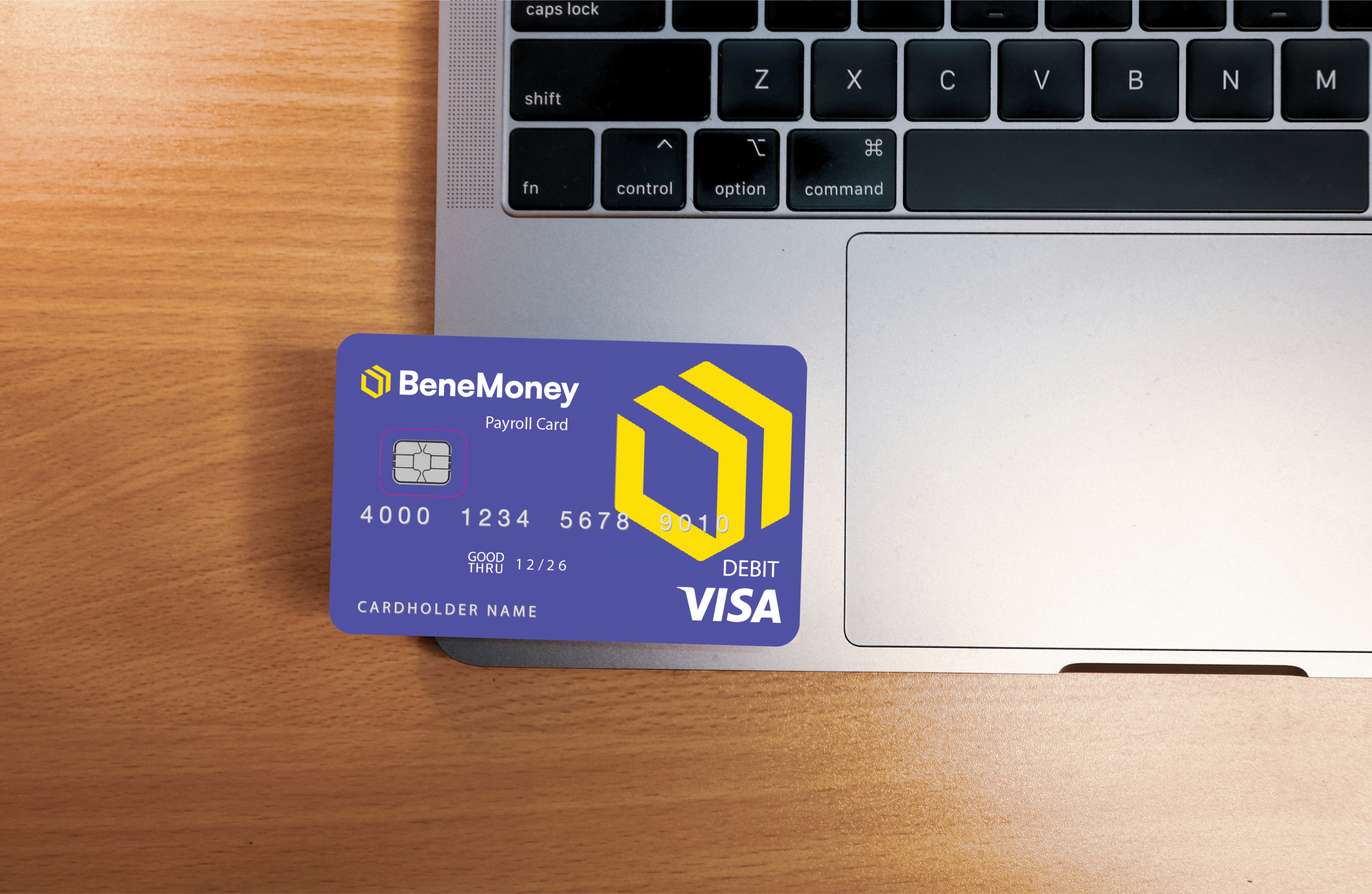
BeneMoney takes a different approach. The BeneMoney Card allows employees to convert their no-credit-check loan repayments into an emergency savings account after the loan is paid off. The automatic payroll deduction that funded loan repayment continues, but now those funds go directly into savings.
This model addresses a common challenge: employees who repay loans often don't redirect those payments toward savings. By keeping the same deduction structure in place, the transition from debt repayment to wealth building happens without additional effort.
Round-Up Programs
Some paycards offer round-up savings features. Each purchase is rounded to the nearest dollar, with the difference deposited into savings. While the individual amounts are small, they accumulate over time.
How Does Pay Advance Access Work on Paycards?
Pay advance access, sometimes called earned wage access (EWA), lets employees withdraw a portion of wages they've already earned before the scheduled payday. This feature can reduce reliance on high-interest alternatives when unexpected expenses arise.
The Mechanics of Earned Wage Access
EWA programs track hours worked against payroll records in real time. Employees can request an advance, typically capped at 50% of earned wages for that pay period. The funds are deposited to their paycard, and the amount is automatically deducted from their next paycheck.
This structure means no employer cash flow exposure. The wages are already earned; employees are simply accessing them earlier. According to From Day One, 62% of American workers live paycheck to paycheck. For these employees, a $200 expense before payday can trigger a cascade of late fees, overdraft charges, or high-interest borrowing.
Evaluating EWA Fee Structures
Not all earned wage access programs are equal. Some charge employees per-transaction fees, while others offer the service at no cost to workers. When evaluating vendors, ask whether employees pay for access and how those fees compare to the alternatives they'd otherwise turn to.
A recent report cited by From Day One indicated that employers offering EWA see a 10-29% reduction in turnover. At a replacement cost of $3,500 per hourly worker, even a modest retention improvement can generate significant savings.
What Compliance Requirements Apply to Payroll Paycards?
Payroll paycards fall under the Electronic Fund Transfer Act (EFTA) and Regulation E, enforced by the Consumer Financial Protection Bureau. State wage and hour laws add another layer of requirements that vary by jurisdiction.
Federal Regulations
The CFPB Bulletin 2013-10 reaffirms that Regulation E applies to payroll card accounts. This means employers must give written disclosures about fees, terms, and conditions before employees enroll in a paycard program.
A critical federal rule: you cannot require employees to receive wages on a paycard at a specific financial institution. The EFTA prohibits mandatory redemption at a designated bank. Employees must have the choice to opt out and receive wages through an alternative method like direct deposit or paper check.
State Law Variations
More than half of U.S. states have laws governing payroll paycards. According to SHRM, common state requirements include:
- Employees must have free access to their full wages at least once per pay period
- Balance inquiries must be available without charge
- ATM networks must include sufficient locations for reasonable access
- Employers must offer alternative payment methods
States with specific paycard regulations include Arizona, California, Colorado, Connecticut, Illinois, Maryland, Minnesota, New York, Pennsylvania, and Texas, among others. Some states like New Jersey, Kansas, and Rhode Island prohibit certain automatic payroll deduction structures entirely.
How Do Paycard Programs Affect Employer Cash Flow?
From a finance perspective, paycards don't fundamentally change your cash flow position. You're funding the same wages on the same schedule; you're simply redirecting where those funds land.
Reduced Administrative Costs
The cost savings come from administrative efficiency. Paper check production, mailing, reissuance for lost checks, and bank reconciliation fees all decrease when more employees move to electronic payment methods.
For companies with significant unbanked populations, paycards eliminate the need to maintain parallel payment systems. Everyone receives wages electronically, simplifying payroll operations.
Turnover Cost Reduction
The indirect cash flow impact may be more significant. Financial stress costs employers in absenteeism, reduced productivity, and turnover. The Bank of America study found that 57% of employees live paycheck to paycheck and 51% pay off their credit cards in full monthly. For the rest, financial stress follows them to work every day.
Both Gallup and SHRM estimate that replacing an employee costs between one-half and two times their annual salary. A retention improvement driven by better financial wellness benefits can offset program implementation costs many times over.
What Questions Should You Ask When Evaluating Paycard Vendors?
Not all paycard programs are structured the same way. Before selecting a vendor, clarify these decision points:
Fee Transparency
What fees do employees pay? ATM withdrawals, balance inquiries, monthly maintenance, inactivity charges, and card replacement fees can erode the value of the benefit. The goal is to give employees access to their wages, not create a new cost center for them.
Ask vendors to specify fee structures for every transaction type. Then compare those fees to what employees currently pay through check-cashing services or other alternatives.
Payroll Integration
How does the paycard system integrate with your existing payroll platform? Manual data entry increases error rates and administrative burden. The most effective programs pull data directly from your HRIS and process payments automatically.
BeneMoney's implementation team handles the integration process, connecting automatic payroll deductions to the platform so repayments happen without HR intervention.
Savings and Financial Wellness Features
Does the paycard include features beyond wage distribution? Programs that combine paycards with savings tools, financial education, or access to responsible credit address the root causes of financial stress rather than just the symptom of needing wages earlier.
Compliance Support
Who handles regulatory compliance? With state laws varying significantly, vendors should take responsibility for ensuring disclosures and program structures meet requirements in every jurisdiction where you operate.
How Can Paycards Support Broader Financial Wellness Goals?
A paycard alone is a payment mechanism. Combined with other financial wellness tools, it becomes part of a strategy that addresses employee financial health at multiple levels.
Connecting Paycards to Financial Education
The most effective programs pair wage access with education and coaching. BeneMoney includes free credit counseling for all borrowers, tailored to individual financial situations. This combination gives employees both the tools and the knowledge to improve their financial standing.
Creating Pathways Out of Debt
Financial education alone doesn't eliminate emergencies or solve immediate cash shortfalls. When employees face unexpected expenses, access to responsible credit options matters more than another budgeting webinar.
BeneMoney's no-credit-check loans offer employees a structured repayment path through automatic payroll deductions. The fixed interest rate stays the same regardless of credit score, and repayments are reported to all major credit bureaus. This structure turns debt from a revolving trap into a clear payoff timeline.
What Role Do Paycards Play for Unbanked Employees?
For employees without bank accounts, paycards offer something traditional direct deposit cannot: inclusion. These workers often face the highest costs for basic financial services, paying check-cashing fees that can consume 2-5% of each paycheck.
Eliminating Check-Cashing Costs
A paycard eliminates the need to cash a check entirely. Wages load automatically, and employees can access them immediately through ATM withdrawals or purchases. The savings from avoided fees can amount to hundreds of dollars annually.
Building a Financial Foundation
Paycards also serve as an entry point to the formal financial system. Employees who successfully manage a paycard may gain confidence to open traditional bank accounts or access other financial products.
The BeneMoney Card supports direct deposit for unbanked employees, giving them a VISA-branded card accepted everywhere debit cards work. No service fees on the card itself means the full value of wages goes to employees.
How Should You Measure Paycard Program Success?
Implementing a paycard program is one thing; knowing whether it's working is another. Define success metrics before launch so you can track outcomes and justify continued investment.
Adoption and Utilization Rates
Track what percentage of eligible employees enroll in the paycard program. Low adoption may signal communication gaps or concerns about fees. High enrollment but low utilization suggests the program isn't meeting employee needs.
Financial Wellness Indicators
If your paycard program includes savings features or earned wage access, monitor participation in those components. Are employees building emergency funds? Are advance requests decreasing over time as financial stability improves?
Retention and Productivity Metrics
Connect paycard adoption to broader workforce metrics. Compare turnover rates between employees using the paycard program and those who aren't. Track absenteeism patterns. Look for correlations between financial wellness benefit usage and engagement scores.
What Implementation Steps Should HR Leaders Follow?
Rolling out a paycard program requires coordination across HR, payroll, and finance. A structured implementation process reduces friction and increases adoption.
Vendor Selection and Contract Negotiation
Start by evaluating multiple vendors against your specific criteria. Prioritize fee transparency, integration capabilities, compliance support, and the availability of additional financial wellness features.
During contract negotiations, clarify responsibilities for employee communications, ongoing support, and compliance updates as regulations change.
System Integration and Testing
Work with your IT and payroll teams to integrate the paycard system. Run parallel tests during at least one pay cycle before going live. Verify that wages transfer correctly, deductions are accurate, and employees receive proper notifications.
Employee Communication and Enrollment
Launch a communication campaign that explains what the paycard is, how it works, and why it benefits employees. Address common concerns about fees and security. Make the enrollment process simple, ideally completing in a few minutes.
BeneMoney's loan application takes less than five minutes and is completed entirely online. A similarly streamlined enrollment process for paycards increases participation rates.
Building a Decision Framework for Paycard Evaluation
Payroll-linked paycards address real workforce challenges. They give unbanked employees access to wages without costly check-cashing fees. They can include savings features that build financial resilience. Combined with pay advance access, they reduce the need for high-interest borrowing when emergencies arise.
The evaluation process should focus on outcomes rather than features. Will your employees actually use this program? Will it reduce financial stress? Can you measure the impact on retention and productivity?
For HR and finance leaders, the opportunity is to move financial wellness from a soft benefit to a measurable workforce investment. Paycards, when implemented thoughtfully and combined with broader financial wellness programs, can be part of that strategy.
FAQs about Payroll-Linked Paycards for Employers
What is a payroll-linked paycard?
A payroll-linked paycard is a reloadable prepaid debit card that receives your wages directly each pay period. Unlike direct deposit, it doesn't require a traditional bank account. You can use the card for purchases, ATM withdrawals, and bill payments wherever debit cards are accepted.
Are payroll paycards mandatory for employees?
No, employers cannot require employees to receive wages exclusively on a paycard. Federal law under the Electronic Fund Transfer Act mandates that employees have alternative payment options. You must offer at least one other method such as direct deposit or paper check.
What fees do employees typically pay with paycards?
Fees vary by program but may include ATM withdrawals, balance inquiries, monthly maintenance, and card replacement. BeneMoney's paycard has no service fee, and employees receive faster access to pay without check-cashing costs.
How does earned wage access affect employer cash flow?
Earned wage access doesn't change your cash flow position because employees are accessing wages already earned. The funds are deducted automatically from the next scheduled paycheck. No additional employer funding is required.
Can paycards help employees build savings?
Yes, many paycard programs include savings features. BeneMoney's Card converts into a savings account after loan payoff, allowing the same automatic payroll deduction that funded loan repayment to build emergency savings instead.
What compliance requirements apply to payroll paycards?
Payroll paycards fall under the Electronic Fund Transfer Act and Regulation E. State laws add additional requirements varying by jurisdiction, including free access to full wages, no-cost balance inquiries, and disclosure requirements.
How do paycards benefit unbanked employees?
Paycards eliminate check-cashing fees that can consume 2-5% of each paycheck for unbanked workers. Employees receive wages electronically with immediate access through ATM withdrawals or purchases. BeneMoney's Card supports direct deposit for unbanked employees without service fees.
What should HR leaders look for when selecting a paycard vendor?
Evaluate fee transparency, payroll integration capabilities, compliance support, and additional financial wellness features. BeneMoney combines paycards with no-credit-check loans, automatic payroll deductions, and free credit counseling for a complete financial wellness approach.
Ask us about our BeneMoney Card.
BeneMoney Card Visa® Prepaid Card is issued by Pathward®, N.A., Members FDIC pursuant to a license from Visa U.S.A. Inc. This card can be used everywhere Visa debit cards are accepted. Visa is a registered trademark owned by Visa International Service Association.